The Complete Guide to Asbestos Survey Types (HSG264 Explained)
Under HSE guidance HSG264, there are two main types of asbestos survey: a management survey, which locates and assesses asbestos so it can be managed safely during normal occupation, and a refurbishment and demolition survey, which is fully intrusive and required before any building work. A re-inspection survey then monitors known asbestos over time.
What an asbestos survey actually is
An asbestos survey is a systematic inspection of a whole building, or a clearly defined part of one, carried out to find, sample and risk-assess any asbestos-containing materials (ACMs) that are present. It is not a single lab test and it is not a guess based on how something looks. A surveyor works methodically through the property, records where suspect materials are, takes samples where they are needed, and produces a written report and register you can act on. The point of a survey is to replace opinion with evidence, because no material can be confirmed as asbestos by sight alone. Only a laboratory test or a professional survey confirms it.
This matters because asbestos was mixed into ordinary building products for most of the twentieth century, and the finished materials look identical to the versions that contain none. Any building built or refurbished before the year 2000 may contain asbestos, so knowing your property's age tells you whether a survey is worth arranging, not whether asbestos is actually there. A survey answers that second question properly. If you want the background on why appearance is so unreliable, our guide on how to identify asbestos explains it in full.
There is more than one kind of survey, and choosing the wrong one is a common and costly mistake. The rest of this guide walks you through the types recognised by the Health and Safety Executive (HSE), what each covers, when each is required, and how a survey differs from a single sample test, so you can commission the right one with confidence.
The HSG264 framework (and why "Type 1/2/3" is obsolete)
The current rules for how asbestos surveys are carried out in the UK come from HSE guidance HSG264, "Asbestos: The survey guide", published in 2010. HSG264 sets out how surveys should be planned, how samples should be taken, what competence a surveyor needs, and how findings should be reported. When you commission a survey, this is the document your surveyor should be working to.
HSG264 replaced an older system that classified surveys as Type 1, Type 2 and Type 3. You may still hear those terms used informally, and some older reports and websites refer to them, but they are obsolete. Under the old system a Type 1 was a presumptive survey with no sampling, a Type 2 added sampling, and a Type 3 was the fully intrusive pre-demolition survey. HSG264 folded those into a clearer, two-part framework built around what the survey is actually for. If someone offers you a "Type 2 survey", it is fair to ask them to describe it in current terms so you know exactly what you are buying.
Under HSG264 there are two main survey types: a management survey and a refurbishment and demolition survey. A third activity, a re-inspection survey, is not a separate HSG264 survey type but a periodic check of asbestos that a previous survey already found. Understanding those three is what lets you match the survey to your situation, which the next section lays out side by side.
The survey types, side by side
The table below sets out the main survey activities under HSG264: whether each one is intrusive, when it is required, and what it produces. Read it as a map of your options, then use the notes underneath to work out which one fits your building and your plans.
| Survey type | Intrusive? | When required | What it produces |
|---|---|---|---|
| Management survey | Minimally intrusive | For managing asbestos safely during normal occupation and use of a building. | An asbestos register and the basis for a management plan. |
| Refurbishment & demolition (R&D) survey | Fully intrusive and destructive | Before any refurbishment, demolition or major works can start. | A full record of ACMs to be removed or managed before work begins. |
| Re-inspection survey | Non-intrusive (visual) | Periodically, to monitor asbestos a previous survey already identified. | An updated register showing the current condition of known ACMs. |
Management survey: when do you need it?
A management survey is the standard survey for a building that is staying in normal use. Its job is to locate ACMs so they can be managed safely while people continue to occupy and use the premises. It is minimally intrusive: the surveyor inspects accessible areas, samples materials where needed, and presumes asbestos is present where a material cannot be safely reached or sampled, rather than tearing the building apart to check. A management survey underpins the asbestos register and the management plan that a duty-holder is required to keep. You need one if you are responsible for a non-domestic building and simply need to know what asbestos is present and keep it under control. It is not, however, enough on its own before building work, for the reason explained next.
Refurbishment & demolition survey: when do you need it?
A refurbishment and demolition survey, often shortened to an R&D survey, is a very different thing. It is fully intrusive and destructive, designed to locate all the asbestos that could be disturbed during the planned work, including materials hidden inside walls, floors, ceilings and structures. Because it involves breaking into the fabric of the building, the area being surveyed usually needs to be empty of people, and it may have to be isolated afterwards until it is confirmed clear. This is the survey that must be carried out before any refurbishment, demolition or major works begin. If you own a pre-2000 property and you are planning to renovate, this is the survey you need, and a management survey will not do in its place because it is not intrusive enough to find everything a builder might disturb. Once asbestos is confirmed, our asbestos removal cost guide explains what dealing with it typically involves.
Re-inspection survey: when do you need it?
A re-inspection survey is not a separate HSG264 survey type. It is a periodic monitoring inspection of asbestos that an earlier survey already identified, carried out to check that the material's condition has not deteriorated and that the measures managing it still work. It keeps the asbestos register and management plan accurate over time rather than finding new materials. If you are a duty-holder managing a building with known asbestos in it, re-inspections are part of your ongoing duty to manage, and they are usually planned at regular intervals so nothing quietly degrades unnoticed between checks.
How much does an asbestos survey cost?
An asbestos management survey for a house starts from £165, plus VAT. Most cost £220 to £400. What you pay depends on the survey type, a management survey for day-to-day occupation, or a fully intrusive refurbishment and demolition survey before building work, and the size of the property.
| Survey | Price |
|---|---|
| Asbestos management survey for a house | From £165, plus VAT (most cost £220 to £400) |
| Refurbishment or demolition survey for a house | From £280, plus VAT (most cost £350 to £500) |
| Each extra sample on the same visit | From £20, plus VAT |
The two biggest factors are the survey type (a refurbishment and demolition survey is intrusive, so it costs more than a management survey) and the size of the property and number of samples needed. A survey is almost always far cheaper than the cost of disturbing hidden asbestos during building work, which is why it is a legal requirement before refurbishment or demolition. How we work out these prices.
Survey vs sample test: what's the difference?
People often use the words "survey" and "test" as if they mean the same thing, but they answer different questions. A test is laboratory analysis of one individual sample: it confirms whether that single piece of material contains asbestos and, if so, which type. A survey is a systematic assessment of a whole building or defined area that locates suspect materials, samples and risk-assesses them, and produces a register of what is present and where. A survey usually includes sampling and testing as part of the work. A test on its own does not.
The practical difference is coverage. A single test tells you about one material in one place. It cannot tell you what else is in the building or where else asbestos might be hiding. If you only had a doorstep tile tested, you would learn nothing about the artex overhead, the boiler flue or the panels behind the bath. That is why a survey is the right choice when you need a complete picture, and a standalone asbestos test suits a narrower question about one specific material you have already isolated.
Whichever route you take, the confirmation itself always comes from a laboratory. Samples are analysed at a UKAS-accredited laboratory, and a competent surveyor should be working to recognised standards and following HSG264. What you can rely on is the written result, never a judgement made by looking at a material, because appearance alone never confirms asbestos.
What happens during a survey (and the asbestos register)
Knowing roughly how a survey runs helps you commission the right one and understand what you are paying for. A surveyor begins by agreeing the scope: which building, which areas, and which survey type applies to your situation. They then inspect systematically, area by area, recording every suspect material, its location, its type and its condition. Where a material can be sampled safely, they take a small sample under controlled conditions and send it to a UKAS-accredited laboratory. Where a material cannot be reached or safely sampled, a management survey will presume it contains asbestos rather than leave a gap.
The output is a written report and an asbestos register: a record of what was found, where it is, what condition it is in, and the risk it presents. For a management survey, that register is the foundation of the management plan a duty-holder must keep, setting out how each material will be monitored, managed or removed. For a refurbishment and demolition survey, the report tells contractors exactly what must be dealt with before they start cutting, drilling or knocking anything down.
Do not sample materials yourself. Breaking off a piece to send away releases the very fibres a survey is designed to control. Sampling is a controlled task for a competent professional, using proper protection and containment.
If licensed removal follows a survey, there is a further stage worth knowing about. After higher-risk asbestos is removed, a four-stage clearance is carried out under HSE guidance HSG248, ending in a Certificate of Reoccupation, with an air clearance indicator of 0.01 fibres per cubic centimetre. For context, the workplace control limit for asbestos is 0.1 fibres per cubic centimetre averaged over four hours. You do not need to memorise these figures, but they show that confirming an area is safe again is itself a measured, evidence-based process, not a visual judgement.
Who needs which survey: a plain decision guide
The right survey depends less on who you are and more on what you are about to do with the building. Here is how the three situations usually break down.
Homeowner planning renovation
If you own a home built before 2000 and you are planning to refurbish, extend or demolish any part of it, you need a refurbishment and demolition survey of the areas affected before work starts. A management survey is not sufficient for building work, because it is not fully intrusive and can miss materials hidden behind the surfaces your builder will disturb. Getting this survey first protects you, your household and the tradespeople doing the work.
Landlord or duty-holder managing a building in use
If you are responsible for a non-domestic building, or the common parts of certain residential buildings, and it is simply staying in use, you need a management survey to build your register and management plan, followed by re-inspection surveys to keep that register current. This is the core of the legal duty to manage, which the next section explains. Our guide to asbestos compliance for landlords and businesses covers those obligations in more detail.
Business about to fit out or refurbish premises
If you run a business and you are moving into, fitting out or refurbishing older premises, you need both perspectives: a management survey to understand and manage the building in day-to-day use, and a refurbishment and demolition survey covering any area where construction work will take place, carried out before that work begins. In practice, many businesses hold a management survey for the whole site and commission targeted R&D surveys ahead of specific projects.
The one-line rule. Management survey to occupy and manage a building safely; refurbishment and demolition survey before any building work; re-inspection to keep a known register up to date. If in doubt, ask a competent surveyor to confirm which applies before you book.
Strong vs weak survey report: a worked example
A survey is only as useful as the report it produces. The duty to manage asbestos sits in Regulation 4 of the Control of Asbestos Regulations 2012, which applies to non-domestic premises and the common parts of some residential buildings. A good report gives a duty-holder everything they need to meet that duty. A weak one leaves dangerous gaps. Here are two reports on the same building so you can see the difference.
States the survey type and scope, lists every location inspected, and records each suspect material with its condition and risk. Sampling was done by a competent surveyor and analysed at a UKAS-accredited laboratory, with materials that could not be reached clearly marked as presumed. It hands you a register and clear recommendations you can build a management plan on.
Gives no clear survey type or scope, lists a few materials as “likely asbestos” with no samples taken, and leaves whole areas unmentioned. Nothing is confirmed by laboratory analysis, so you cannot tell what is actually asbestos, what was presumed, or what was simply missed. It is not a foundation you can manage a building on.
The lesson is that a survey should leave you with certainty, not more questions. If a report cannot tell you what was tested, what was presumed and what condition each material is in, it has not done the job the regulations expect of it.
Common mistakes when commissioning a survey
Most survey problems come from ordering the wrong type, or from treating a survey as a box-ticking exercise rather than a safety measure. These are the ones we see most often.
Booking a management survey before building work
This is the single most common and most dangerous error. A management survey is not fully intrusive, so it is not designed to find asbestos hidden inside the structures a refurbishment or demolition will disturb. Before any building work on a pre-2000 property you need a refurbishment and demolition survey, not a management survey.
Treating a single test as a survey
Having one material tested tells you about that one material and nothing else. It does not locate asbestos elsewhere in the building, and it does not produce a register. Where you need a complete picture, commission a survey. Where you have genuinely isolated a single material, a sample test may be all you need, but do not mistake one for the other.
Skipping re-inspections after the first survey
A survey is a snapshot in time. Materials degrade, get knocked, or are affected by leaks and works, so a register left untouched for years drifts out of date. Duty-holders who skip regular re-inspections quietly lose the accuracy the duty to manage depends on.
Not checking the surveyor's competence
Anyone can call themselves a surveyor. A survey you can rely on is carried out by someone working to recognised competence standards and following HSG264, with samples analysed at a UKAS-accredited laboratory. Ask how they are accredited or certificated, and how samples are analysed, before you commit.
If you are not sure which survey your situation calls for, the safest step is to describe your building and your plans to a competent professional and let them confirm it. You can get a free quote for the right survey, carried out to HSG264 with any samples analysed at a UKAS-accredited laboratory and the result confirmed to you in writing. If any of the terms in this guide are new to you, our asbestos glossary explains each one in plain English, and the asbestos survey service page covers what a survey includes.
Primary Sources & Further Reading
- HSE: Asbestos surveys
- HSE: HSG264 Asbestos: The survey guide
- HSE: The duty to manage asbestos (Control of Asbestos Regulations 2012)
- HSE: Asbestos general information
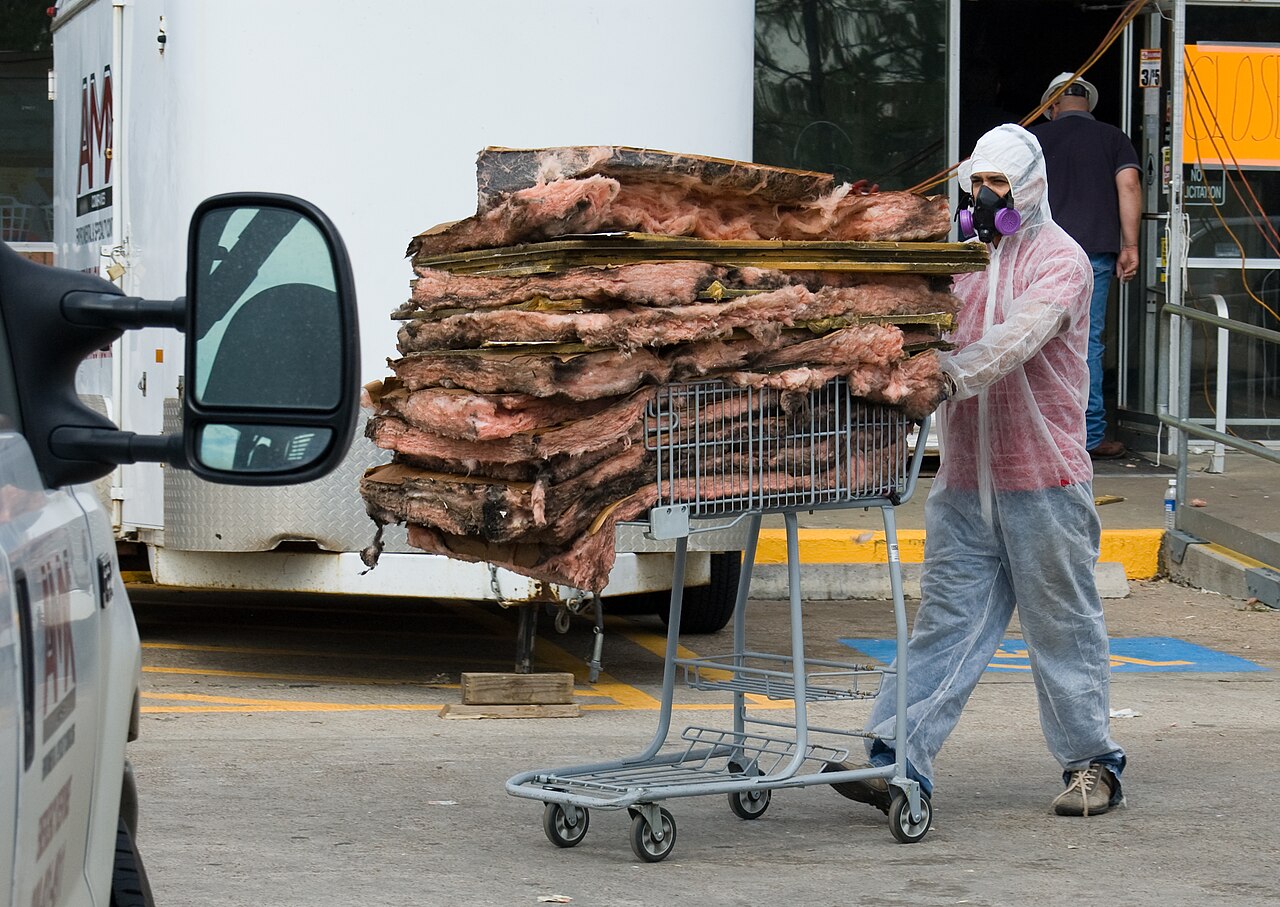
Photograph via Wikimedia Commons: Samir Valeja / FEMA (public domain).