Asbestos Test Kits and What Testing Costs
A home asbestos test kit is a sample bag, a form and a prepaid envelope to a lab. The lab does the test, the same one a professional would send for. What differs is who takes the sample: it can release fibres, and a bad sample can give a clean result that means nothing. So we'd always have a trained person take it. Postal kits start from £30, including VAT; a sample taken by a visiting surveyor starts from £75, plus VAT.
Can you test for asbestos yourself?
You can buy a kit. They're sold openly and they aren't expensive. But we wouldn't take the sample yourself: taking it can release fibres, and HSE says sampling should be done by a suitably trained person. A badly taken sample can also give a clean result that means nothing.
Before you buy one, know what you're actually getting, because the name is misleading. A test kit doesn't test anything. It's a sample bag, instructions, a form and a prepaid envelope to a lab. The testing happens in the lab, days later, on whatever you posted.
The kit isn't the test. The lab is. So the analysis you get is the same one a professional would send for. What differs is who took the sample, and that matters more than most people expect.
What is actually in the box
Kits vary more than they look. Here's what you usually get:
- Sample bags and a way to seal them. Usually a resealable bag and a label.
- A form. You write down what the sample is and where it came from. Filling this in properly matters more than it looks.
- A prepaid envelope to the lab, with the cost of the test included in the price.
- Sometimes protective kit. A disposable mask, gloves, wipes. Sometimes not, and this is the part people miss.
That last point is the most useful thing to know before you buy. Kits are often sold two ways: "sample only" and "includes PPE" (protective equipment).
A sample-only pack is a bag, a form and postage. It assumes you already have the right protection and will use it. The cheaper listing is usually the one that assumes that.
Are home test kits accurate?
The lab analysis is accurate, as long as the lab is UKAS accredited for asbestos identification. Under a microscope, asbestos is asbestos. A good lab won't get that part wrong, and it doesn't care who put the sample in the bag.
So "are they accurate?" is the wrong question. The result is only as good as the sample, and the lab can't tell you the sample was a poor one. A bad sample doesn't come back as an error. It comes back as a clean result.
The part that goes wrong
Most of what's written about kits is about the safety of taking a sample, and that's real. Disturbing the material is the risky part, and a kit hands that job to you.
Damp the material first, take the smallest piece you can, don't use power tools, and seal it properly.
The quieter problem is taking a sample that truly represents the material. This is the one that actually wastes people's money:
- Layers. An old floor may be tiles, over glue, over an older covering. Sampling one layer tells you about that layer and nothing else. This is the most common way a clean result misleads someone.
- One sample, one material. A result covers what you sent. It says nothing about the ceiling, the airing cupboard or the garage.
- Uneven mixing. Asbestos wasn't always spread evenly through a material, so one small piece may not reflect the whole.
- Sampling the wrong thing. Easy to do when you're not sure what you're looking at, which is exactly why you're testing.
A clean result on a badly taken sample is worse than no result. No result keeps you careful. A clean result gives you the confidence to get the tools out, and that confidence is the dangerous part.
What kits cost, and which shops stock them
Lots of people search for a particular shop, and the answer isn't what most expect. We checked what each shop stocked on 7 September 2026. Shops change what they carry, so treat this as a snapshot, not a promise.
Screwfix
Stocked? Not found
A search on the Screwfix site for "asbestos test kit" brought up water hardness kits. No asbestos kit came back.
B&Q
Stocked? Yes
Listed in one, two, three, four and five sample versions, each as "sample only" or "includes PPE".
Online marketplaces
Stocked? Widely
The widest range of kits and pack sizes.
Postal test kits start from £30, including VAT, and most cost £35 to £50. The price depends on how many samples are included, whether protective kit comes with it, and whether you pay for a faster lab result.
Compare on cost per sample, including the lab test, and check whether protection is in the box. A two-sample pack with no protective kit and a one-sample kit with a mask and gloves aren't the same buy. The listing titles don't make that obvious.
What professional testing costs
Professional testing costs more than a kit, and it buys something different: someone else takes the sample. Here's what each option gets you:
- Laboratory analysis of a sample you post: the lab test only. Someone still has to take the sample.
- A sample taken and tested by a visiting surveyor: a surveyor comes out, takes the sample and has it tested.
- Asbestos management survey for a house: a surveyor checks the whole property, samples what needs sampling, and gives you a written record of what's there.
- Refurbishment or demolition survey for a house: opens up walls, floors and ceilings before building work. More samples, more labour.
Laboratory analysis of a sample you post
From £25
plus VAT
A faster result costs more.
A sample taken and tested by a visiting surveyor
From £75
plus VAT
Most cost £95 to £165
The number of samples and how quickly you need the result affect the price.
Asbestos management survey for a house
From £165
plus VAT
Most cost £220 to £400
The size of the property and the number of samples taken affect the price.
Refurbishment or demolition survey for a house
From £280
plus VAT
Most cost £350 to £500
This survey is intrusive, so the size of the property and the areas being opened up affect the price.
Your price depends on the job. Every quote is free. Prices are shown before VAT unless they say otherwise.
Most postal kits cost £35 to £50, including VAT. A sample taken and tested by a visiting surveyor starts from £75, plus VAT, and most cost £95 to £165.
Price is rarely the real reason to pick one. It's whether you're confident you can take a sample that means something, and whether you need a record that will satisfy anyone else.
The full price list is in our UK asbestos removal cost report, which also explains how we work out these prices.
How long results take
The test itself is quick. What sets the timescale is the post and the queue. A kit usually means one to three days in the post each way, plus the lab's own turnaround, so expect about a week.
Some services advertise next-day or same-day analysis. That means fast once it arrives, not fast overall.
If you have a deadline, a builder waiting, or an exchange date, that matters. A sample taken in person and handed to a lab is far quicker than anything that relies on the post twice.
If work has stopped while you wait for the answer, the cheapest option on paper is rarely the cheapest in practice. A week of a stalled job costs more than the gap between a kit and a professional sample.
Is there free asbestos testing?
Realistically, no. Labs have to be paid to run the test. Anything advertised as a free asbestos test is usually one of three things:
- Sampling included in a paid job. Fair and common. A contractor quoting for work often includes taking and testing samples in the price. It isn't free, it's included.
- Your landlord or council's duty. If you rent, ask your landlord first. In a block of flats, whoever runs the building must manage asbestos in the shared parts, like halls and stairs. In council or housing association homes, ask them. That really doesn't cost you anything.
- A lead form. "Free asbestos test" as a headline, then a phone number. The test isn't the product. You are.
We'd rather say that plainly than dress up a quote form as a free test. Getting a material identified costs something. The only real question is which route is worth it.
What UKAS accreditation means
UKAS is the United Kingdom Accreditation Service. A lab accredited by UKAS for asbestos identification has been independently checked as competent at that exact work, and is checked again to keep it. It's the difference between a result and a piece of paper.
It matters in practice too. A surveyor, a solicitor, a lender or an enforcing authority will accept a UKAS-accredited result. An unaccredited one may satisfy your own curiosity and nothing else.
Ask these before you buy any kit:
- Which lab tests the sample, by name?
- Is it UKAS accredited for asbestos identification, not just accredited in general?
- Does the price include the lab test, or only the postage and the bag?
- What does the report say, and will you get the certificate itself?
If a kit won't answer the first two plainly, it isn't worth buying at any price.
When a kit is fine, and when it is not
Our advice is a professional sample every time. If you still use a kit, keep to the limits on the left. Anything on the right needs a professional, whatever the price.
If you still use a kit, only when
- It's one material, clearly visible, and you can see what it's made of
- It's already damaged, so you can take a loose piece without causing damage
- You want to know for your own planning, not for a document
- Nothing is waiting on the answer
- You have proper protection and will use it
Get a professional when
- There are layers, or you're not sure what you're looking at
- You'd have to break, cut or climb to reach it
- Building work is planned, which needs a survey, not a sample
- It's a rental, a workplace or anywhere the duty to manage applies
- A sale, a lender or an insurer is involved
- It's crumbly, falling apart, or has already been disturbed
The one most people get wrong is the third on the right. If work is planned, a single sample is the wrong tool. You need a refurbishment survey, which looks for everything the work will disturb, not just the one thing you already suspected.
What to do with the result
If it comes back positive
It isn't an emergency, and the first instinct, to get it out, is usually wrong. Asbestos in good condition that's left alone is low risk, and you don't have to remove it just because it's there.
Note what it is and where, leave it alone, and only think about removal if it's damaged or something is going to disturb it. Our guide on encapsulation versus removal covers that decision.
If it comes back clear
Be clear about what you've been told. The result covers the sample you sent, from the spot you took it. It isn't a clean bill of health for the room, the floor or the house. Other materials, or other layers under the one you sampled, are still unknown.
Keep the certificate. Whichever way it went, it's worth money later. It answers a buyer's surveyor and a contractor before they start, and saves the next person doing it all again. Keep it with the house paperwork, not in an inbox.
Whatever the result says, it describes one material on one day. Nothing you can see, photograph or compare online tells you what a material contains. That's the whole reason labs do this.
We don't sell test kits and we earn nothing from them. Our advice is to have the sample taken properly, so nothing gets disturbed that shouldn't and the result stands up to a buyer, a landlord or a contractor. That's what we arrange.
Primary Sources & Further Reading
- HSE: Arrange an asbestos survey (sampling by a suitably trained person)
- HSE: Asbestos surveys and sampling
- HSE: Locations of asbestos and taking the right action
- UKAS: United Kingdom Accreditation Service
- Control of Asbestos Regulations 2012
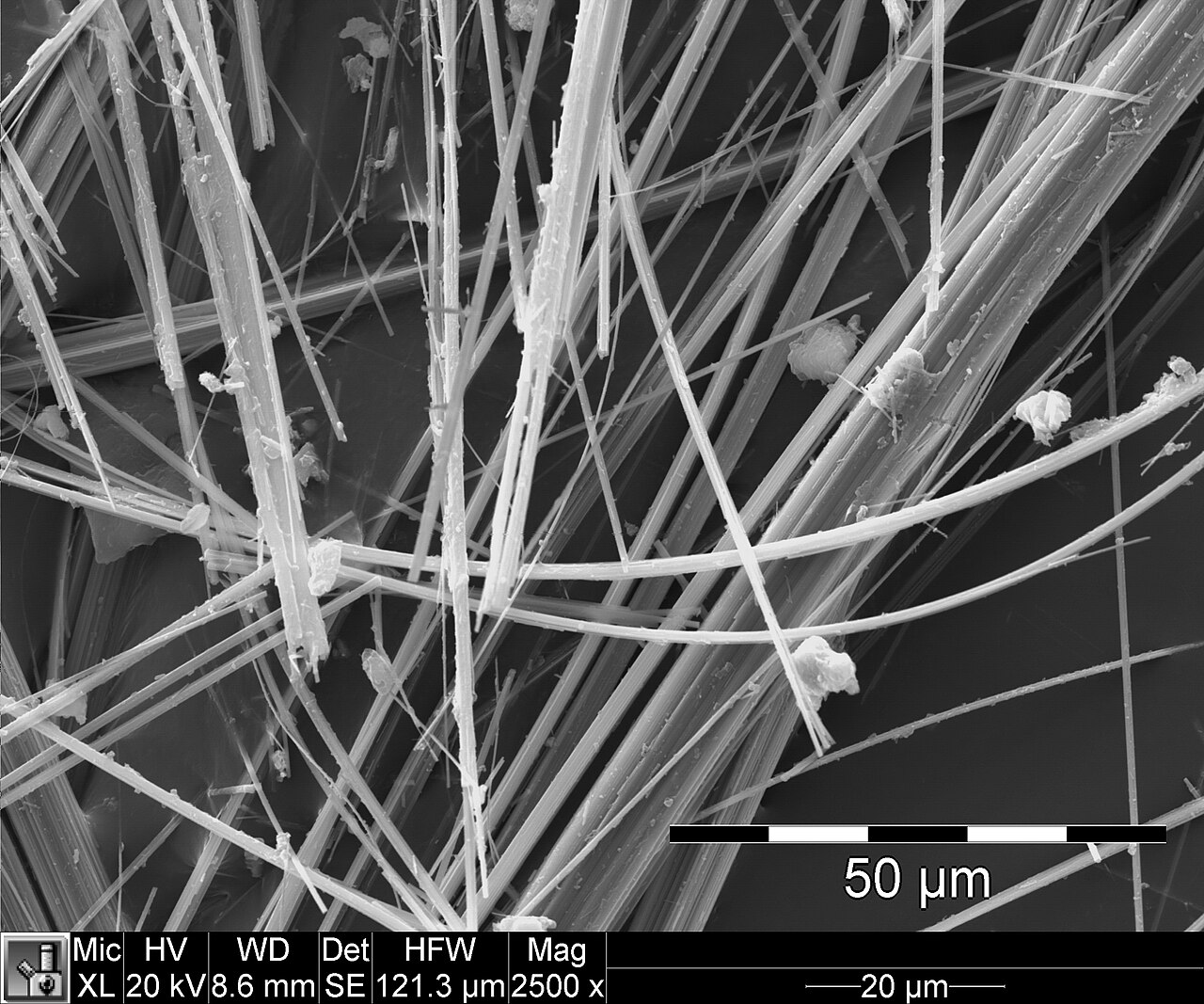
Photograph via Wikimedia Commons: Ravaka (CC BY-SA 3.0).