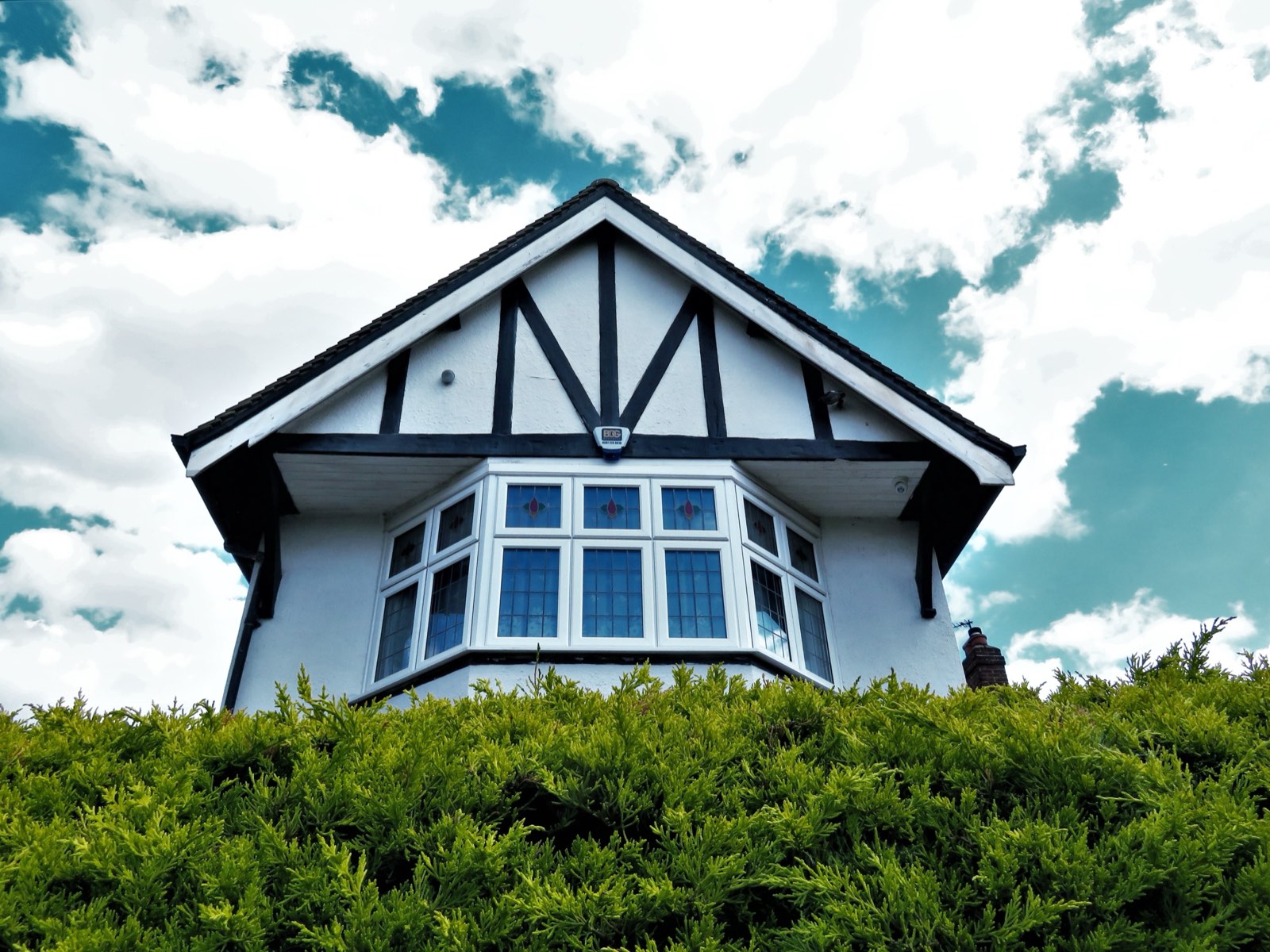
Asbestos Soffits
Old soffits and fascias can contain asbestos, either asbestos cement or asbestos insulating board. You can't reliably tell which by looking. A sample tested by a lab confirms it. In good condition, they're often best left alone. Removing cement soffits typically costs £400 to £2,200 per job, plus VAT. Board soffits are usually licensed work and cost much more.
Think your soffits are asbestos? What to do now
- Leave them alone. Don't drill, cut, sand or break them, and don't pull off any covering that's already over them.
- Tell your roofline fitter or any other trade before they start.
- Have a surveyor take a sample. A lab test tells you if it's asbestos, and which kind. Buying the house? Find out whether you need an asbestos survey.
- Get a quote if they're damaged or you're replacing the roofline.
Cement or board: why it matters
Asbestos soffits are one of two materials. HSE's diagram of a house labels them "AIB or asbestos cement soffits and fascias". Which one you have decides the risk, who can work on it and the price.
Asbestos cement
- A hard board: ordinary cement mixed with asbestos.
- Lower risk while it's intact. Weathering can loosen fibres on the surface.
- Removal is normally non-licensed work, done by trained workers.
- Typically the cheaper job of the two. Prices are below.
Asbestos insulating board (AIB)
- A board that breaks easily and releases fibres when it does.
- Higher risk, especially if damaged.
- Removal is usually licensed work for an HSE-licensed contractor.
- Costs much more to remove, for the reasons below.
The two can look alike, so the lab decides. It confirms asbestos and can test how much water the board absorbs, which is how cement is told from board. Until then, HSE's rule for trades is to treat it as insulating board.
How to tell if soffits are asbestos, and what they look like
Much like any other soffit, which is why you can't tell by eye. Here's what they can look like:
Hard grey board
HSE describes asbestos cement as a hard, grey material, and says modern fibre cement looks very similar. So this proves nothing on its own.
White panels
Photos of real homes show white soffit panels made of insulating board. White doesn't mean cement, and grey doesn't mean board.
Painted or wood effect
A coat of paint hides what a board is made of. Some insulating board fascias even have a wood effect finish.
A strip under the roof edge
The undercloak is a strip under the edge of the roof. HSE's photos show one made of asbestos cement, beneath the roof overhang.
Age is the best clue. Asbestos can be in any home built or refurbished before 2000. That doesn't mean every older soffit is asbestos, and asbestos testing settles it. For other materials around the home, see how to identify asbestos.
Are asbestos soffits dangerous?
Not while they're in good condition and left alone. HSE says asbestos in good condition that nobody disturbs doesn't present a risk.
The danger comes from breaking, drilling or sanding them. Insulating board breaks easily and releases a lot of fibres when it does. Cement is tougher, but years of weather can loosen fibres on its surface.
Do asbestos soffits need replacing?
Not just because they're asbestos. Soffits in good condition are often best left where they are, checked from time to time. It makes sense to replace them when:
- they're badly damaged and can't be protected
- you're replacing the roofline anyway
- building work will disturb them
Can you paint asbestos soffits?
Yes, if they're in good condition, but it's a job for someone trained to work with asbestos. HSE has a method for painting asbestos cement, and one for undamaged insulating board too. Two rules matter most:
- Never sand or rub them down before painting.
- Badly damaged board isn't for painting. It's a job for an HSE-licensed contractor.
Can you cover asbestos soffits with uPVC?
It's a common question. We found no HSE guidance on uPVC soffits as such, but its guidance for trained workers on enclosing undamaged asbestos applies:
- Fix the new boards to non-asbestos material where you can.
- Where something has to attach to the asbestos, HSE says to use adhesive.
- Screws or nails would make holes in the asbestos, which HSE's guidance aims to avoid. Drilling asbestos cement has its own controlled method.
- So does drilling insulating board, with strict time limits.
- Badly damaged boards aren't for covering.
Our advice: have the boards tested first, so the fitter knows whether they're working over cement or board. Keep the result with your house papers. Covered asbestos is still there, and future trades and buyers will want to know. More on the choice in encapsulation versus removal.
Do you need a licensed contractor?
Cement soffits: normally not. HSE lists them as normally non-licensed work, done by trained workers. If the work breaks the boards up badly, it has to be notified. HSE also expects a partial enclosure around the work when cement soffits are removed.
Insulating board soffits: usually yes. HSE lists them as usually licensed work, for a contractor licensed by HSE. Only very short removal jobs can be done without a licence, and those must still be notified.
Not sure which you have? Ask us for a free quote and we'll arrange the test. More on how licensing works in do you need a licence to remove asbestos?
What removal involves
- Access. Soffits are at height, so the job may need scaffolding or a platform. For licensed board work, putting up the scaffold can count as licensed work too.
- Notice, for board. The contractor tells HSE at least 14 days before licensed work starts, unless HSE agrees a shorter time.
- The work area is enclosed. HSE's code of practice expects at least a partial enclosure when soffits are removed, and its methods aim to keep boards whole rather than break them.
- Signed off, for board. After licensed work, an independent analyst checks the area and issues a certificate before it's used again.
What asbestos soffit removal costs
Removing asbestos cement soffits typically costs £400 to £2,200 per job, plus VAT.
Asbestos cement soffits and fascias removal
£400 to £2,200
per job, plus VAT
A single run costs far less than a whole house, and working at height can mean scaffolding.
A sample taken and tested by a visiting surveyor
From £75
plus VAT
Most cost £95 to £165
The number of samples and how quickly you need the result affect the price.
Insulating board soffits cost much more. The work is usually licensed, so it can need licensed scaffolding, a screened-off work area, 14 days' notice and a sign-off at the end. A test tells you which price applies.
For a quote, tell us on the form roughly how long the run is, whether the house is one or two storeys, and whether you know what the boards are made of. Your price depends on the job. Every quote is free. Prices are shown before VAT unless they say otherwise. How we work out these prices.
We arrange asbestos soffit removal across the UK, cement or board. Get a free quote.
Getting rid of it
Old asbestos soffits are hazardous waste. Whoever takes them away needs a consignment note, which goes with the waste to where it's disposed of. Ask for a copy.
They should never go in your household bin. Some councils take small amounts of asbestos from householders, and each sets its own rules. See what your council does. Council schemes are for small amounts that have already been taken down and wrapped. For anything more, or anything still in place, we arrange the whole job.
If you're in Scotland: asbestos waste is special waste, regulated by the Scottish Environment Protection Agency. How disposal works in Scotland.
Key takeaways
- Soffits fitted before 2000 could be asbestos cement or insulating board. Only a lab test confirms it.
- In good condition and left alone, they're often best left where they are.
- Cement soffits are normally non-licensed work. Board soffits are usually licensed.
- Test before you paint, cover or replace them. Never sand them, and never drill them without the right method.
Primary Sources & Further Reading
- HSE: Locations of asbestos and taking the right action
- HSE: Diagrams of where asbestos can be found
- HSE: Asbestos FAQs
- HSE: Licensed asbestos contractors
- HSE: Non-licensed work
- HSE: Sourcing professional advice and services
- HSE: Asbestos essentials, introduction (a0)
- HSE: Asbestos essentials a1, drilling asbestos insulating board
- HSE: Asbestos essentials a7, painting asbestos insulating board
- HSE: Asbestos essentials a8, enclosing asbestos materials
- HSE: Asbestos essentials a9, drilling asbestos cement
- HSE: Asbestos essentials a16, painting asbestos cement
- HSE: Asbestos essentials em9, disposal of asbestos waste
- HSE: Asbestos: The survey guide (HSG264)
- HSE: Managing and working with asbestos, Approved Code of Practice (L143)
- Control of Asbestos Regulations 2012, regulation 9
- GOV.UK: Hazardous waste consignment notes