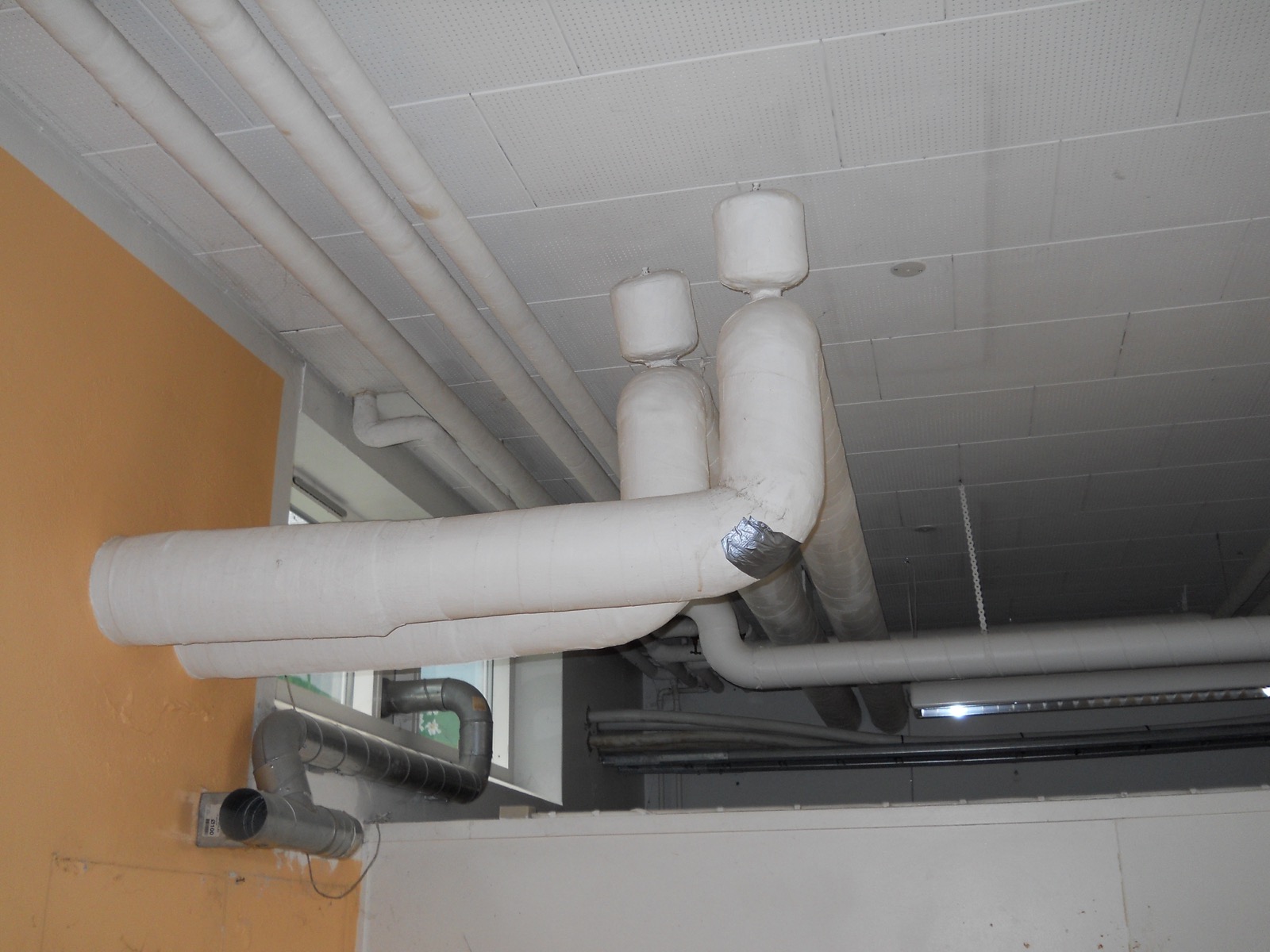
Asbestos Pipe Lagging
Old pipe lagging can contain asbestos, and it's one of the most dangerous kinds because it crumbles easily. You can't tell by looking: only a lab test can. Don't disturb it. Removing it needs an HSE-licensed contractor, and typically costs £1,500 to £3,000 per job, plus VAT.
Think it's asbestos lagging? What to do now
- Leave it alone. Don't cut, pull, sand or break into it, and leave any bits that have fallen off where they are.
- Keep trades away from it until it's been tested, and tell them about it before they start.
- Have a surveyor take a sample. A lab test is the only way to know for sure.
- Get a quote if it's damaged or in the way of building work.
- Buying the house? Find out whether you need an asbestos survey.
What does asbestos pipe lagging look like?
It can look like several different things, which is why you can't tell by eye. HSE says the only way to confirm asbestos is to analyse a sample. Here's what lagging can look like:
A fibrous material that flakes
HSE describes lagging as mostly a fibrous material which flakes and powders easily.
Covered in cloth or paint
It was often wrapped in a protective coating or painted, and HSE says the coating can be any colour. That makes it harder to spot.
A hard plaster finish
Some lagging was sealed with a hard plaster, often itself containing asbestos, to protect it from knocks.
Shaped sections on pipes
Pre-formed pipe sections were strapped on. It's common to find different materials on the same pipe or boiler.
What about hessian? A cloth wrap, hessian or otherwise, tells you nothing about what's under it. Asbestos lagging was often wrapped in cloth and painted, so the outside can look perfectly ordinary.
Age is the best clue. Asbestos can be in any home built or refurbished before 2000. If the lagging could be that old, treat it as asbestos until a test says otherwise. Asbestos testing is quick and cheap compared with getting it wrong.
Where you'll find it at home
HSE says asbestos lagging is mostly found on heating systems: around boilers and around pipework. In a house, look at:
- Heating pipes running from an old boiler, and the boiler itself
- Hot water cylinders and tanks (HSE's guides call them calorifiers)
- Leftover bits of lagging on brickwork or in ducts
Old boiler flues are a different material. See our asbestos flue guide.
How dangerous is asbestos pipe lagging?
It's one of the riskiest kinds. HSE calls it one of the most dangerous materials containing asbestos, because disturbing it releases fibres very easily into the air.
Lagging can be very high in asbestos. HSE's survey guide puts the content anywhere from 6% to 85%, and says all types of asbestos were used. Blue asbestos was used in lagging until 1970, and brown was phased out during the 1970s.
The risk comes from disturbing it. Lagging in good condition that nobody touches is often best left where it is, checked from time to time.
Does pipe lagging need a licensed contractor?
Yes, to remove it. Removing asbestos lagging needs a contractor licensed by HSE. Most other work that disturbs lagging needs a licence too.
The exception HSE gives as an example is repairing minor damage to a small section of pipe insulation where the outer coating has broken. Even that isn't free-for-all work: it's notifiable, so it needs trained workers, notice to the authorities and health checks.
You'll see pages saying a licence is needed for "all" lagging work, or quoting size limits. The exact position is above. More on how licensing works in do you need a licence to remove asbestos?
Leave it, seal it or remove it?
- Good condition, nothing planned: leave it and keep an eye on it.
- Good condition, but you want it protected: sealing asbestos that's in good condition is non-licensed work, done by trained workers. Much old lagging was already sealed under cloth and paint.
- Damaged, or building work planned: badly damaged asbestos that's likely to get worse should be removed if it can't be protected, and lagging only by a licensed contractor.
Not sure which fits? See encapsulation versus removal, or ask us for a free quote and we'll get it looked at.
What removal involves
Here's what to expect when licensed contractors take lagging out of a home:
- Notice first. The contractor tells the enforcing authority (HSE, for a home) at least 14 days before work starts, unless the authority agrees a shorter time.
- The area is sealed off. Lagging work normally needs an enclosure: a sealed, airtight work area with the air extracted, tested with smoke before work begins.
- Checked before you go back in. An analyst carries out a four-stage clearance, including an air test. All four stages must pass, and you get a certificate for reoccupation.
- The waste goes with it, double-wrapped and taken away as hazardous waste.
What asbestos lagging removal costs
Asbestos pipe lagging removal typically costs £1,500 to £3,000 per job, plus VAT.
Asbestos pipe lagging removal
£1,500 to £3,000
per job, plus VAT
Removing it is licensed work. The length of pipe and how hard it is to reach decide the price.
A sample taken and tested by a visiting surveyor
From £75
plus VAT
Most cost £95 to £165
The number of samples and how quickly you need the result affect the price.
A longer run, or lagging that's harder to reach, costs more. For a quote, tell us on the form where it is, roughly how many metres, and whether any of it is damaged. Your price depends on the job. Every quote is free. Prices are shown before VAT unless they say otherwise. How we work out these prices.
We arrange asbestos lagging removal across the UK, by HSE-licensed contractors. Get a free quote.
Getting rid of it
The licensed contractor takes the lagging away as hazardous waste, with a consignment note that records where it went. Keep your copy.
Asbestos must never go in your household bin. Where a council says what type of asbestos it takes from householders, it's small amounts of cement (bonded) asbestos, not lagging. See what your council does.
If you're in Scotland: asbestos waste is special waste, regulated by the Scottish Environment Protection Agency. How disposal works in Scotland.
Key takeaways
- Lagging fitted before 2000 could contain asbestos. Only a lab test tells you.
- It's one of the most dangerous kinds, because it crumbles easily. Don't disturb it.
- Removing it needs an HSE-licensed contractor, and so does most work that disturbs it.
- Lagging in good condition can often stay where it is, checked from time to time.
Primary Sources & Further Reading
- HSE: Locations of asbestos and taking the right action
- HSE: Licensed asbestos contractors
- HSE: Notifiable non-licensed work
- HSE: Non-licensed work
- HSE: Deciding who does the work
- HSE: Asbestos FAQs
- HSE: Diagrams of where asbestos can be found
- HSE: Sourcing professional advice and services
- HSE: Asbestos essentials, introduction (a0)
- HSE: Asbestos: The survey guide (HSG264)
- HSE: Asbestos: The licensed contractors' guide (HSG247)
- HSE: Asbestos: The analysts' guide (HSG248)
- HSE: Managing and working with asbestos, Approved Code of Practice (L143)
- Control of Asbestos Regulations 2012, regulation 2
- Control of Asbestos Regulations 2012, regulation 9
- GOV.UK: Asbestos in your home
- GOV.UK: Hazardous waste consignment notes
Photo: User:EPO, via Wikimedia Commons (free use with credit).