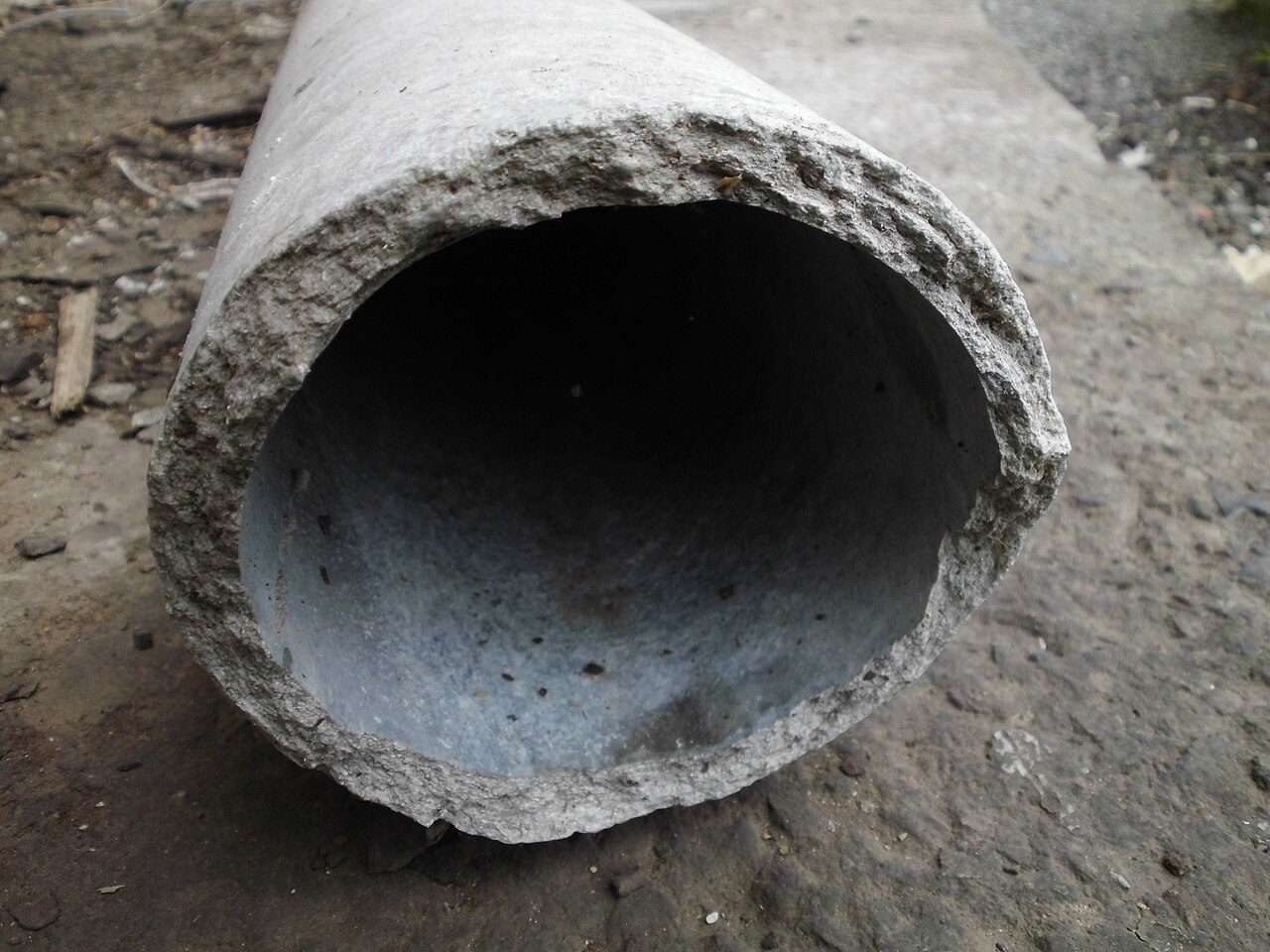
Asbestos Flue Pipe Removal: Cost, Rules and Who Can Do It
If the flue on an old boiler is asbestos cement, leave it alone and have it removed by a trained firm. Asbestos flue or flue pipe removal typically costs £250 to £500, plus VAT. The work generally doesn't need an HSE licence, and only a lab test confirms a flue is asbestos. We arrange flue removal across the UK.
Told your flue is asbestos? What to do now
Most people find out when a boiler is being replaced and the work stops. An asbestos cement flue is a small, self-contained job to put right. Four steps:
- Leave it alone. Don't cut, drill or break it.
- If it's damaged, stop using the appliance until it's been checked.
- Get a quote to have it removed. We arrange asbestos flue removal across the UK. Ask with your quote whether a test is needed first.
- Then the boiler work can go ahead. A Gas Safe registered engineer disconnects and reconnects any gas appliance.
Is my flue asbestos?
It may be, and you can't settle it by looking. HSE says asbestos cement flues are sometimes found in boiler systems, including in homes.
Asbestos cement is a hard, grey material. White asbestos was used in cement products until November 1999. So treat a cement flue in a home built or altered before 2000 as suspect until it's been tested.
- Where to look. Moulded asbestos cement flues were used inside and outside buildings, and cowls (the caps on top of a flue or chimney) outside. Chimney cowls and flue terminals, the fittings at the outside end of a flue, can contain asbestos too.
- Why a test is needed. The only way to confirm a material contains asbestos is to analyse a sample. See what an asbestos test costs, or ask us about asbestos testing.
- Not every asbestos flue is cement. The survey guidance shows a metal-clad gas flue with a white asbestos lining. It says flues for wood-burning stoves were commonly made with asbestos between two layers of stainless steel. What we say here about price and licensing is about cement flues only.
Asbestos around fireplaces, gas fires and stoves is a separate subject. For the other places it turns up, see where asbestos is found in UK homes.
What does it cost to remove an asbestos flue?
Asbestos flue or flue pipe removal typically costs £250 to £500, plus VAT. That's for taking out an asbestos cement flue or flue pipe at a home.
Asbestos flue or flue pipe removal
£250 to £500
plus VAT
The length of the flue, whether it runs through a loft or a wall, and access all affect the price.
The range is for the flue itself. Scaffolding, a test, a new flue, work on the boiler and making good afterwards aren't included.
Any insulating board or lagging round the flue is a different job too: see our asbestos pipe lagging guide.
For your own price, tell us on the form roughly how long the flue is, where it runs, whether the boiler is still connected to it, and your postcode. Your price depends on the job. Every quote is free. Prices are shown before VAT unless they say otherwise. How we work out these prices.
Does an asbestos flue have to be removed?
Not just because it's asbestos. HSE's advice to householders is that asbestos in good condition, and unlikely to be damaged, is often best left where it is and checked from time to time.
Badly damaged material that's likely to be damaged further should be removed if it can't be protected.
That advice covers asbestos in general. It's the best guide there is for an old flue left in a loft after a boiler was changed. We found no official advice written about flues in particular. A flue usually comes out at one of three moments:
- The boiler or heater it serves is being replaced.
- Other work would disturb it, such as a loft conversion or a new roof.
- It's cracked, broken or crumbling.
At any of them, we arrange the removal. Get a free quote.
Our advice: if the flue is damaged and the appliance is still in use, treat the appliance as unsafe. A flue is what carries its fumes outside. For a gas appliance, it's illegal to use one you suspect is unsafe. Turn it off and don't touch it until a Gas Safe registered engineer has checked it.
Can a gas engineer remove an asbestos flue?
It comes down to asbestos training, whatever the trade. HSE lists gas fitters, plumbers and heating engineers among the trades that need asbestos awareness training.
But awareness training doesn't allow work that will disturb asbestos. Workers must be trained to work safely with it, or trained to be aware of it and stop work.
A trade magazine says the same. Registered Gas Engineer tells engineers who find asbestos to stop work, and to work on it only if they've had the right training. So a firm fitting a new boiler may ask for the flue to be removed first.
The gas side is a separate job with its own rule. Anyone employed to work on a gas appliance in a home must be Gas Safe registered.
The official task sheet for removing a gas heater also says to use a Gas Safe registered engineer to disconnect and make safe gas appliances. Before work starts, ask two questions:
- Who is disconnecting the appliance, and are they Gas Safe registered?
- Has whoever is taking out the flue been trained for non-licensed asbestos work?
Does asbestos flue removal need a licensed contractor?
Generally not, when the flue is asbestos cement. HSE lists removing asbestos cement flues and ducts as lower risk work that doesn't need a licence. It calls this non-licensed work.
It still has to be done by trained workers. The condition is that the material is handled carefully and removed without being broken up.
For every material in a home, see do you need a licensed asbestos contractor?
- A badly damaged flue. Where cement will be badly broken up, the firm has to notify the work to the authorities. In exceptional cases, a licensed contractor may be needed.
- The joints. The task sheet for this job says the joints are sometimes sealed with asbestos string.
- What's around it. A casing of asbestos insulating board round the flue, and lagging (the insulation wrapped round old pipes) beside it, are higher risk materials. Lagging, sprayed coatings and insulating board should only be removed by a contractor licensed by HSE.
We arrange asbestos removal for both: a cement flue on its own, and the licensed work where there's board or lagging around it. Get a free quote.
Can you remove an asbestos flue yourself?
HSE's advice to the public is not to repair or remove any asbestos yourself unless you've been trained for non-licensed asbestos work. It strongly encourages using trained professionals.
Its task sheet shows what the job involves. It's written for trades, not householders. It calls for disposable overalls, a respirator, dampening the flue and its seals, and taking the flue out whole where possible.
Never cut, drill or break a cement flue. Cement is likely to release more fibres if it's scraped, sawn or worked on with power tools.
We arrange flue removal across the UK. Get a free quote.
How do you get rid of an asbestos flue?
We can get it taken down and taken away for you. If the flue is already out and wrapped, we arrange a collection: see what asbestos collection costs.
Get my free flue removal quote
An asbestos cement flue is hazardous waste. It mustn't be mixed with household waste, and should be double wrapped and labelled.
When a tradesperson takes the flue out, the waste they produce is theirs to remove and dispose of correctly.
Some councils will take one too. Fourof the council entries we've checked name flues among the asbestos cement items they accept at a site: Gwynedd, Leicestershire, Medway and Peterborough.
Some of those take only asbestos you removed yourself, and some councils take none. Look up your own council, and never cut or break a flue to make it fit.
Council schemes are for small amounts that have already been taken down and wrapped. For anything more, or anything still in place, we arrange the whole job.
If you're in Scotland. Asbestos waste there is special waste, regulated by the Scottish Environment Protection Agency. See how to dispose of asbestos in Scotland.
Key takeaways
- Treat a cement flue in a home built or altered before 2000 as suspect until a test says otherwise.
- Leave a sound flue alone, and never cut, drill or break it.
- Stop using an appliance whose flue is damaged. If it's gas, have a Gas Safe registered engineer check it.
- Ask who is disconnecting the appliance and who is trained to take out the flue.
- Tell us about any boxing or lagging around the flue, because that changes the job.
Primary Sources & Further Reading
- HSE: Locations of asbestos and taking the right action (asbestos cement products)
- HSE: Non-licensed work with asbestos
- HSE: Asbestos essentials a35, Replacing an asbestos cement flue or duct
- HSE: Asbestos FAQs
- HSE: Asbestos, the survey guide (HSG264)
- HSE: Asbestos information, instruction and training
- HSE: Training and information for work involving asbestos
- HSE: Introduction to asbestos safety, actions to take
- HSE: Gas safety, home owners
- HSE: Asbestos essentials a31, Removing a gas or electric heater
- GOV.UK: Dispose of household waste
- Registered Gas Engineer: Gas Engineer's Guide to Asbestos (26 October 2017)
Photo: Ural-66, public domain, via Wikimedia Commons.